

The Worst Houseguest in the World
new fiction from Danielle Altman

Danielle Altman’s batshit story is the third helping of Little Blanksgiving, our series with Blank from Dirt.fyi. I was delighted through my first read when Daisy Dirt sent this to me—it keeps surprising. Go with caution if you’re afraid of Kathy Acker and/or spiders.
- AV
25% OFF EVERYTHING IN THE SHOP
WITH CODE BLANKSGIVING
littleengines.shop
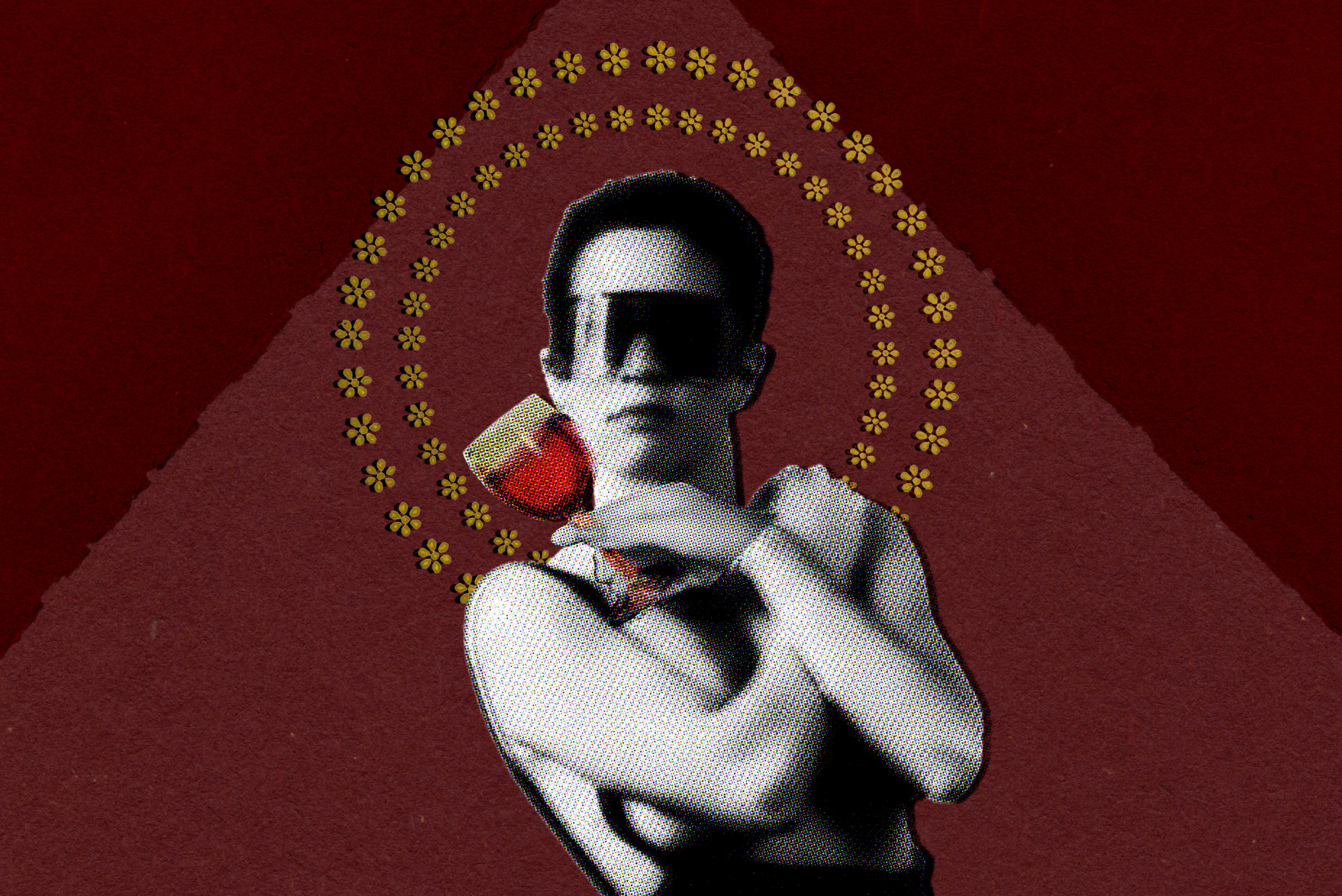
THE WORST HOUSEGUEST IN THE WORLD
by Danielle Altman
“You can do whatever you want with my work.” –Kathy Acker
The Dream
I dream I enter a large elevator at a university. Some students invite me to watch a Korean horror movie. I’m excited to make friends (not suspicious of them at all). The movie is called Angle of Repose. It’s played on a warped 1980s-style television in the student lounge. When the movie starts, I blink. When I open my eyes, I’m in the movie.
It’s a bright summer day on the outskirts of Seoul. I’m in a café with friends and a new boyfriend. I like my boyfriend very much, I’m attracted to him, I want to take him in the back and fuck him. His hips slant when other girls come near. Our relationship will end badly.
A girl takes my arm and whispers flatly in English, he’s going to kill you.
I become afraid. I don’t know how to get around Seoul without them. I hope for the movie to end without dying (if I die in the movie, I die in real life). We walk out to the street (long curving road with homes, traffic, tall buildings).
Are we still in the movie? I ask the girl who warned me.
A large tarantula has fallen from the sky, my boyfriend says.
We approach the spot where it’s fallen. It’s a man in a tarantula costume, peeling off furry legs and a parachute. He’s very attractive, more attractive than my boyfriend.
I’m getting bloated from too much beer, the tarantula man says in a resigned tone of voice. I’ve fallen very far. Can someone bring me a glass of red wine?
More parachutes in the sky, blooming red against white. I know then the world is ending.
When I wake up
You’ve gone from ending to ended.
The Nightmare
They ask me to do the eulogy at your funeral in two weeks because we were close. Truth is, no one was close to you. Instead of writing it, I become obsessed with interpreting my dream: Are you the tarantula man, was I attracted to my dad? No. I wanted to save you (stop cancer). I’m sorry I couldn’t.
Eric says the dream had nothing to do with you. The night I had it, I’d fallen asleep reading Kathy Acker’s novel, The Childlike Life of the Black Tarantula, which she’d written under the pen name The Black Tarantula. Kathy Acker died of cancer too. I cried about her death while reading her biography more than I’ve yet to cry over you. Not because you were a bad guy. I miss our phone calls about the Arizona monsoons and how much you hate your doctors and wife.
Grief works in mysterious ways, Eric says. I pad around rooms and wait for grief to arrive, the houseguest that will stay an indeterminate amount of time.
Kathy Acker made maps of her dreams, so I map my tarantula dream with a Sharpie on poster paper while Eric is at work and the kids are at school. Acker wrote: “Maps are dreams: Both describe desire, where you want to go, but never the reality of the destination.” I’m not sure if understanding death is my destination, or you. I suck at drawing. I roll up the dream poster and hide it from my family. I debate presenting it at your funeral instead of giving your eulogy.
The night before your funeral, I type “angle of repose” into Google on my phone. It’s the one “angle” I haven’t tried: The name of the horror movie in my dream.
Why are you Googling random things when you’re twelve hours away from delivering an unwritten eulogy, Eric asks from the other side of the bed.
It’s eulogy research, I say.
My Googling is a dead end. The Angle of Repose is a mathematical equation and a book by Wallace Stegner that you would have found boring and that I’ve never read.
When I should be sleeping, I replay the memory of a nightmare I had when I was six. I’m in my bedroom in my nightgown, tight and itchy around my neck. The only glow is from the nightlight, turning my shadow into a monster creeping around the room. I’m supposed to be sleeping. Instead, I’m lining my stuffed animals up against the foot of the bed. I sit cross-legged on my comforter, taking a rest to rub sore spots on my head where Mom had let my pigtails out a few minutes before. The walls darken. Start slipping and sliding. It’s spiders. Thousands of them, crawling up the walls in my bedroom. I want to run, but I’m stiff. I try to scream, but no sound comes out. Just honey. Black honey. Dripping out of my mouth and pooling into the lap of my nightgown, spread tight as a trampoline between my crisscross applesauce knees.
The spiders drop from the ceiling, plonk, plonk, plonk on my shoulders, getting tangled in my hair, tickling my face to get in my mouth. Caught in my black honey lap. There is wet stuff on my face, looser and wetter than honey, it’s making the spiders slip off my cheeks and lips, I want to throw up, I’m shaking, I want to make it stop—I’m crying
Stop! My mom yells. She’s shaking me.
The lights are on
It’s so bright
Vicki! You yell. Stop.
You send her away. I stop crying and throw my arms around you. You sweep me up and hold me tight.
They’re still here, I whisper in your ear. The spiders.
My legs hooked around your hips, we explore every nook and cranny so you can prove me wrong. You strip the sheets, shift my bed and dresser, do everything a good dad could to comfort me. You put me down, kneel, and hold my shoulders gently. You scare spiders more than they scare you, you say.
I don’t believe you.
How do you know that? Have you ever known a spider?
You say that like you’ve known a spider.
Your eyes frantically scan the room and land on my closet. Do you know what spiders love more than anything? You ask. Dark, safe places. Like rainboots. Get your rainboots.
No! I curl my lips down in my cutest frown, the one that always works on you.
Get your boots, you say firmly. You’re a tough kid.
You know I’m not tough. All the weight in my body gathers like a fist in my chest, pushing up into my throat like I might cry. But I have no choice. I rush toward my closet, grab the boots, hurl them at you.
You grab one out of the air like it’s nothing. Look inside of it, you say. I do, but it’s too dark in the boot.
Put your hand inside of it, you say. I can’t. I’m trembling.
Do you trust me? You ask.
I burst into tears. Your face changes, you no longer look like the hero in charge but a guy who might be worrying he’s a bad dad. I don’t want you to feel like a bad dad, so I thrust my hand in the boot and wait for it, the creep-crawlies, maybe even a sting. But there is nothing. Just rubber and air.
See, you say. You’re tough.
But you still cave and give me what you know I want. You lift me and make a bed for me on the dog bed on the floor next to your side of the bed in your and Mom’s room.
The morning of the funeral, exhausted, my Notes app full of random niceties but no coherent eulogy, Mom and I are drinking coffee in the backyard of our Airbnb. I tell her about the nightmare and my memory of it.
Do you think that story might work for the eulogy? I ask her.
Oh, yes, your dad always loved spiders. Didn’t he ever tell you about Chester?
Who’s Chester?
His pet tarantula, she says. Her eyes crinkle in confusion as she puts her coffee down. He never told you about Chester?
The Eulogy (In Part)
In 1971, my dad traveled up the coast of California to surf with friends. Outside of Lompoc, where the highway narrows to a wind tunnel between the Santa Ynez mountains and the cookie dough hills crumble into vineyards, their van approached a thick, shifting band of black snaking across the road. Wide and long enough to block their path.
My dad got out of the van. He neared the black band. Thousands of tarantulas, migrating. He got an empty ice chest from the van, plucked a tarantula up, and dropped it in the cooler.
“I’ll call him Chester,” he said to his friends. “He’ll make a good pet.”
In Jalama, they unloaded the van to camp. A park ranger, eager to fine hippies for illegal fishing, approached them. “Show me what’s in the cooler,” he said to my dad.
“You don’t want me to do that,” my dad said.
“Show me what’s in the cooler,” the ranger said.
My dad opened the cooler. Chester jumped at the ranger, hissing. My dad gently caught Chester and put him back in the cooler.
Back home, my dad set up a spacious aquarium with piles of dirt, rocks, and sticks for Chester. But Chester grew slumpy and sluggish and wouldn’t eat. My dad released him at a dumpster. A place to hide, lots of food. Other bugs to befriend.
You can tell a lot about a man based on the way he treats his tarantula.
The Worst Houseguest in the World
Back home after the funeral, grief finally arrives. She announces herself by banging on my front door. Through my peephole, I get glimpses of her, a leatherdyke in a shredded black dress, tough as shit, like she’s a weightlifter or something, kicking at my door with black leather motorcycle boots. Shaved blonde head and dark woeful eyes.
“Hey c’mon, let me in, I’m starving,” she says in a low lilting voice that doesn’t match her streetwise words and intimidating look.
Oh my God. It’s Kathy Acker. I hold the front door with all my force against her, only to find a thousand other mini-Ackers creeping up between the floorboards and from beneath the windowpanes like a military surge of post-punk spiders. I cave and let the human-sized Acker and the mini-Ackers sweep in. That’s when I notice that the main Acker has luggage piled on my front stoop. A houseguest who looks like she will be staying for an indeterminate time.
That evening when Eric gets home from work, I tug him into our bedroom and shut the door. Kathy is downstairs teaching my kids swear words in French, and I don’t want her to hear us. He sits on the edge of the bed and slips off his sneakers while I hover over him.
“Can’t you kick her out?” I ask.
“I don’t know if that’s a good idea.” He scans the closed blinds, then the floor.
I sit next to him, press the side of my thigh against his, and gaze up into his eyes. “How about I lure her out back with some red wine and Georges Bataille. You lock the doors, and I’ll sneak back in later with my housekey.”
He squeezes my hand like I’m a child. “Her books and clothes are everywhere. She’s already claimed the couch. Maybe it’s time to accept that you can’t stop her from crashing here. Eventually, she’ll tire of you. Find a long-term place. Besides, she’s more of a city person. She won’t shut up about how much she hates the suburbs.”
I relent. When Eric’s at work and the kids are at school, she directs me to live in t-shirts and underpants. To get myself off on the couch to photos of her when I should be in the school pick-up line. To serve Cup of Noodles and beer for dinner.
Late one night, after she has been with us for about a week, she sits in a torn Vivienne Westwood gown on the edge of the bathtub in my bathroom, smoking, watching me floss and listening to me lament how unproductive I’d been at work and around the house since my dad died.
“You sound like a brainwashed corporate robot. Who cares about dust on the blinds.” She ashes in the tub. I open my mouth to ask her to please be less destructive, but she’s already hopping up and putting her cigarette out in my sink. The sizzle of a Camel dropped in an empty. A dad sound. Lung cancer.
She catches my eye in the mirror, her face a grimace of white hot rage, her skin so translucent that I can make out the shape of her skull. It pulls me back from the floaty sadness of my childhood and the past.
“You’re allowed to be weird,” she says. “Your father died. Besides, if the only thing you want to do is read my books in bed, that’s great. I was way too under-appreciated when I was alive.”
I think of Chester. As long as she needs to stay, it’s important I respect her. Even though I worry she might be a little self-centered, it’s a relief to be told what to do. I make up the dog bed for her in my room and let her store her stinky boots in my closet. While she sleeps, I remember what you said about boots and check them for those mini-Acker spiders, who have mysteriously disappeared.
Kathy sure likes to talk. One Saturday, we’re on a walk, talking about Jean Genet and blowjobs, while my kids fly by on their bikes.
“Do you remember when your dad taught you how to ride a bike?” She asks.
I’m five, back in that alley behind our condo in Bakersfield, the dead heat of summer rising in wiggly waves off the asphalt, you push me, yelling go! go! go! until you force me to go by letting go. HowdareyouIhateyou, sickening drop of stomach, but I’ve done it! Streamers and pigtails flying, ground rattling, I’m free as wind, fast as air. I love reliving these memories, each retelling and re-remembering imprinting you further in my psyche. But Kathy’s pie-in-the-face-in-public reminders of you come on suddenly, make me cry, and are embarrassing.
After a few months, she becomes less pushy about going for walks and having late-night talks. She begins to disappear for hours at a time, which I’m grateful for. The biography was right. Kathy Acker is exhausting. With her hanging around less, I win a two-million-dollar account at work. I clean the blinds. I start wearing pants and stop leaving my vibrator, pussy-damp and gathering cat hair, on the coffee table. But sometimes I miss her.
One night, I’m drinking Pinot Grigio and making chicken piccata, with Kathy sitting on the kitchen counter swinging her heavy motorcycle boots toward the sides of my legs
“The Black Tarantula.” I slice lemon wedges while the chicken frizzles in the pan. “Why did you call yourself that?”
“Why do you think?”
“Because you wanted to kill yourself, Metaphorically. You wanted to stop being Kathy Acker the woman and become Kathy Acker the writer.”
“You’re wrong.” She swipes my wine glass from my hand. “All the Kathy’s I’ve been are immortal. That’s why we write in the historical present.”
Oil hisses, leaps, stings my arm. I turn down the gas just in time. The chicken is on the verge of going from browning to burned. I feel a cool wind, as though the back door has been opened, and it has, it’s hanging open, blue twilight seeping in. I open my mouth to ask Kathy to shut it, but when I glance toward the counter, she’s gone.
All the weight in my body gathers like a fist in my chest, pushing up into my throat like I might cry. She was a thread between worlds, connecting me to you. But I have no choice. When she leaves, she leaves, when she wants to talk, we talk, and when she pushes, I go, go, go. I shut the back door, but I know she’ll be back. In the middle of my kitchen, she left her most beloved possession. Her boots.
DANIELLE ALTMAN’s writing has appeared in Write or Die, Dream Boy Book Club, A Thin Slice of Anxiety, and elsewhere.
25% OFF EVERYTHING IN THE SHOP
WITH CODE BLANKSGIVING
